Wine cellars

A Cellar Worthy Of The Bottles

Cellarvo is an independent guide to building and cooling a private wine cellar, written for collectors who want their wine kept as carefully as it was chosen.

An independent guide. We may earn a commission from some links, at no extra cost to you.

Independent guidanceHands-on researchNo brand biasUpdated for 2026
This September

Harvest season and fall deliveries. September is when futures arrive and new releases land on the doorstep. Make sure there is somewhere proper for them to rest before the cases pile up.

Which room suits a cellar best
Independent guidanceHands-on researchNo brand biasUpdated for 2026
Editor's pick

Signature, $8,000+

The balance of capacity, stability, and finish most collectors want. Split cooling for quiet operation, Upgraded insulation and sealed door, Custom wood or metal racking.

Read the guide
The problem

The cellar protects the collection, so getting it wrong is costly twice over

A wine cellar is only as valuable as the conditions it holds. Get the cooling, insulation, or vapor barrier wrong and you risk the very bottles the room was built to protect, often without any visible warning until a cork fails or a wine dulls. The engineering that prevents that is largely hidden inside the walls.

The temptation is to spend on visible racking and finishes while underspending on the systems that actually matter. A beautiful room that swings in temperature or dries out is a poor guardian of a serious collection. Our aim is to help you build a cellar that performs quietly for decades, not one that only photographs well.

  • Stable conditions that protect every bottle
  • A room sized to a growing collection
  • Quiet, reliable cooling for decades
  • A cellar as considered as the wine
The guide

What to look for in wine cellars and coolers

The details that separate a considered purchase from an expensive mistake at this level.

Cooling system

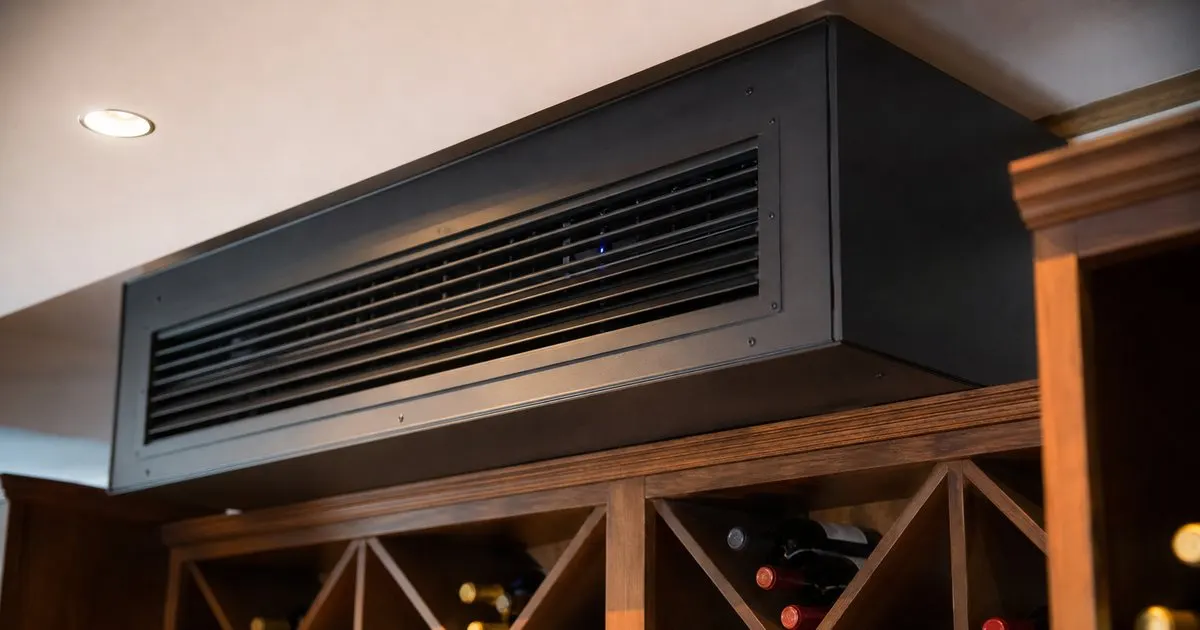
A dedicated wine cooling unit, self-contained, split, or ducted, holds the stable, gentle conditions wine needs. Size it to the insulated volume and heat load, and favor systems designed for wine rather than repurposed air conditioning that overshoots and dries the air.

Insulation and vapor barrier

A continuous vapor barrier and generous insulation are the foundation of a stable cellar. Without them, even a strong cooling unit fights a losing battle against condensation, temperature swings, and the humidity migrating through the walls.

Temperature and humidity control

Wine keeps best at a steady, moderate temperature with controlled humidity. Consistency matters more than hitting a single perfect number, so look for systems that hold conditions with minimal swing across seasons.

Racking and capacity

Wood, metal, or acrylic racking shapes both capacity and character. Plan for the collection you expect to hold, with a mix of storage for cases and display for prized bottles, and materials that suit the cellar's humidity.

Lighting and finish

Wine is sensitive to heat and ultraviolet light, so favor cool, low-UV lighting on a timer. Finishes should tolerate the cellar's humidity, which rules out materials that warp or off-gas in a closed, damp environment.

Door, seal, and vibration

An insulated, well-sealed door completes the envelope, and isolating the cellar from vibration protects sediment and long-aging wine. These quiet details decide whether the room truly holds its conditions once the door is shut.

The selection

How to choose well

A calm, three step way to arrive at the right choice with confidence.

1

Assess the space and collection

Measure the room, note adjacent heat sources, and estimate the collection size now and in five years. Decide whether you want passive storage or full active cooling, since that shapes every later choice from insulation to racking.

2

Design the envelope and cooling

Specify insulation, the vapor barrier, and a cooling system matched to the load before you think about aesthetics. Getting the hidden envelope right is what lets the visible cellar hold its conditions reliably year-round.

3

Build, rack, and commission

Coordinate the build, install racking sized to your collection, and commission the cooling so you confirm it holds target conditions before the wine goes in. A short commissioning period catches problems while they are still easy to fix.

Price guide

What each budget buys

A clear sense of what to expect at every level, from entry to bespoke. Independent guidance, never a sales pitch.

Entry
$5,000+ typical
A properly conditioned small cellar or a converted closet room. Self-contained cooling unit, Insulation and vapor barrier, Modular racking for a starter collection, Low-UV lighting.
Compare entry cellars
Bespoke
$12,000 to $15,000 typical
A tailored cellar designed around your room and collection. Ducted cooling out of sight, Made-to-measure racking and layout, Premium materials and glass features, Professional design and commissioning.
Plan a bespoke cellar

Figures are typical US market ranges to guide your planning, not quotes.

Portrait of Julien Jimenez, founder of Cellarvo
Built and maintained by

Julien Jimenez

Cellarvo exists because the parts of a cellar that protect wine are the ones you never see. We research independently so your collection is kept as carefully as it deserves.

FAQ

Questions, answered

What temperature and humidity should a wine cellar hold?

Aim for a steady, moderate temperature in the mid-50s Fahrenheit with humidity kept in a controlled middle range. Stability matters more than any single perfect figure, since it is the swings, not the setpoint, that harm wine over time.

Do I need active cooling or is passive enough?

A naturally cool, stable underground space can store wine passively, but most homes cannot hold conditions year-round without help. If your room sees seasonal swings or sits above ground, a dedicated cooling unit is usually the safer choice.

Why are insulation and a vapor barrier so important?

They are the envelope that lets the cooling system succeed. Without a continuous vapor barrier and good insulation, humidity and heat migrate through the walls, causing condensation and swings that even a powerful unit cannot overcome cleanly.

How much does a private wine cellar cost to build?

It ranges widely with size, cooling type, racking, and finish, from a modest conditioned room to a bespoke installation. Budget generously for the hidden envelope and cooling first, since those protect the collection and are hardest to redo later.

Does Cellarvo sell cellars or cooling systems directly?

No. Cellarvo is an independent guide and does not sell cellars or take manufacturer direction. We may earn a referral fee when you buy through a link, which never changes our assessments, and nothing here is financial advice.

Can any room become a wine cellar?

Most spaces can, with the right insulation, vapor barrier, and cooling, though interior rooms away from heat sources are easiest. The key is treating the room as a sealed, conditioned envelope rather than simply adding racks to an existing closet.

From the blog

Guides to help you do this well

Practical advice from the team behind Cellarvo.

Get the complete wine cellars guide

Our full buying guide, the price guide, and new research as we publish it. One email, no spam, unsubscribe any time.

By subscribing you agree to our privacy policy.

A Cellar Worthy Of The Bottles

A refined guide to building and cooling a private wine cellar. Independent guidance, written to help you choose well.

Read the complete guide