Which room or space in a home suits a wine cellar best?
Almost any room can become a cellar, but some spaces make it far easier. A few factors point to the best candidates.
The best spaces are cool, stable, and away from heat and sunlight, which is why basements and interior rooms without exterior walls are natural candidates. Spaces with heat or sun exposure work but demand more insulation and cooling. Compact options like under-stair nooks succeed too, so balance stable conditions with convenient, enjoyable placement.
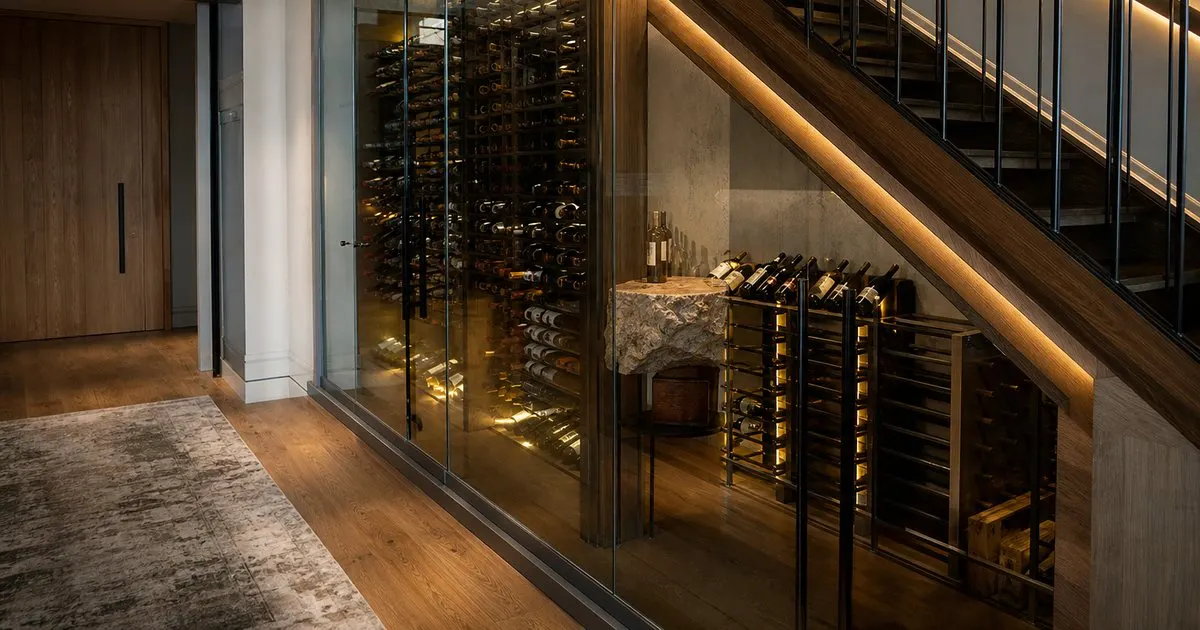
Cool, stable, interior spaces
The easiest spaces to convert are cool, stable, and away from heat sources. Basements are classic candidates because they tend to stay cooler and steadier, reducing the load on the cooling system and helping conditions hold. Related: How do you size a cooling unit for a private wine cellar correctly?
Interior rooms without exterior walls or windows are also favorable, since they are naturally more insulated from outside temperature swings and light. Starting with a space that is already stable makes the whole project simpler and often less costly.
Keep reading: What conditions must a private wine cellar hold to protect fine bottles?, How do you choose between passive and active cooling for a wine cellar?, What is the ideal temperature and humidity for storing wine long term?. See how Cellarvo helps you a refined guide to building and cooling a private wine cellar.
Avoiding difficult conditions
Spaces with lots of heat, direct sunlight, or exterior exposure are harder to condition and will demand more from insulation and cooling. A room beside a furnace, above a garage, or with large windows can still work but requires more careful, and costlier, treatment. Related: Why does a glass-walled wine cellar need more cooling capacity than a closed room?
That does not rule such spaces out. With a proper envelope and sized cooling, a challenging room can hold conditions, but it is worth recognizing the extra effort involved and budgeting for it rather than being surprised later.
Creative and compact options
Cellars need not occupy a whole room. Under-stair spaces, closets, and nooks can be transformed into beautiful compact cellars, and glass-walled installations can make a feature of a small footprint within a living space.
The same principles apply at any size: seal and insulate the space, condition it appropriately, and protect it from light and heat. A small, well-executed cellar can serve a growing collection admirably and add real character to a home. Related: How do you protect a wine collection from light, vibration, and odor?
Practical placement
Consider convenience alongside conditions. A cellar you can reach easily and enjoy, perhaps near a dining or entertaining area, will be used and appreciated, while one relegated to an awkward, difficult space may hold wine well but bring less pleasure. Related: What conditions must a private wine cellar hold to protect fine bottles?
Think too about access for installation and any drainage the cooling may need. Choosing a space that balances stable conditions with practical placement and easy access sets the project up to succeed both functionally and as a part of the home.
- Cool, stable interior spaces and basements are the easiest to convert.
- Rooms with heat, sun, or exterior exposure demand more insulation and cooling.
- Under-stair spaces, closets, and nooks can become beautiful compact cellars.
- Balance stable conditions with convenient, enjoyable placement.

Julien Jimenez
Julien Jimenez is an independent software builder based in Paris. He designs, ships, and operates focused SaaS products for small businesses and independent professionals. Read the full author page.
Frequently asked questions
Is a basement always the best place for a wine cellar?
Basements are excellent because they tend to stay cool and stable, easing the cooling load. But interior rooms and even compact nooks can work well, so the key is a space that is cool, stable, and away from heat and light.
Can I build a wine cellar in a small nook?
Yes. Under-stair spaces, closets, and nooks can become beautiful compact cellars, often with glass walls as a feature. The same principles apply: seal, insulate, condition, and protect from light and heat, whatever the size.
A Cellar Worthy Of The Bottles
A refined guide to building and cooling a private wine cellar. Cellarvo is built to help you put this into practice.
Plan your cellarMore from the Cellarvo blog

Get the complete wine cellars guide
Our full buying guide, the price guide, and new research as we publish it. One email, no spam, unsubscribe any time.