What conditions must a private wine cellar hold to protect fine bottles?
A cellar is defined by the stable conditions it maintains. Understanding them is the foundation of protecting a collection.
A private cellar must hold a steady, moderate temperature and controlled humidity, kept consistent rather than perfect, to protect wine and keep corks sound. It should be dark or low-UV lit, free of vibration and strong odors, and built as a well-sealed, insulated envelope, since that hidden construction is what lets every other condition hold.
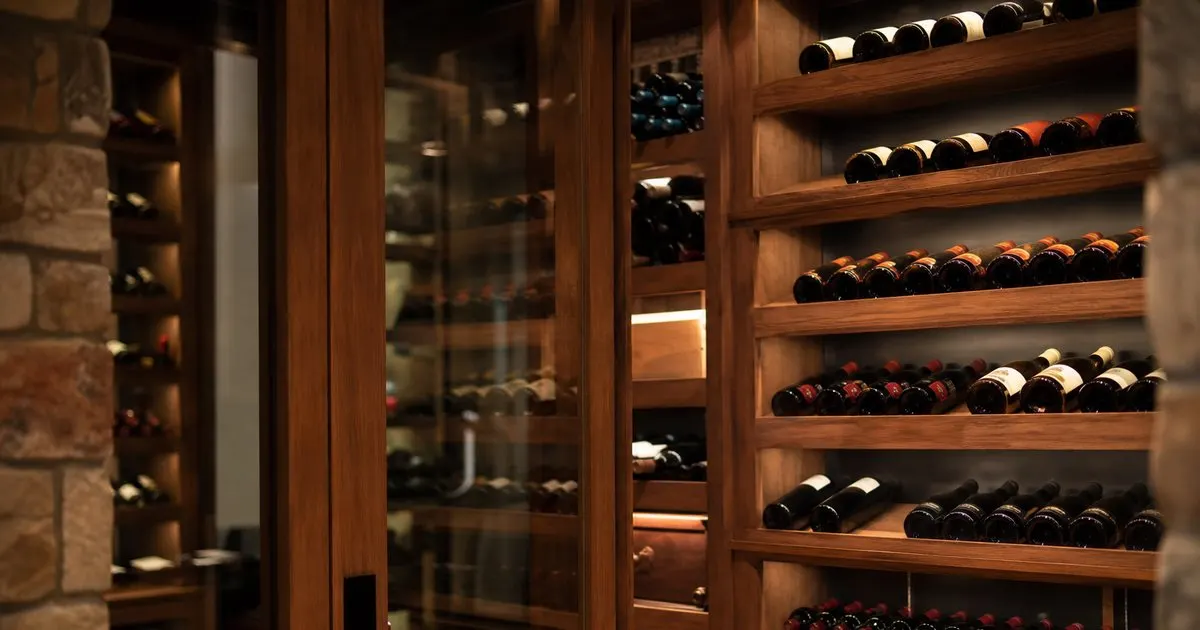
Stable, moderate temperature
The most important condition is a steady, moderate temperature, held consistently rather than allowed to swing. Wine ages gracefully at a cool, constant temperature, while fluctuations stress the wine and can push corks and expand liquid in ways that harm long-term storage. Related: What is the ideal temperature and humidity for storing wine long term?
It is the stability that matters most. A cellar that holds a consistent temperature protects the collection far better than one that hits a perfect number occasionally but drifts up and down with the seasons or the household's heating.
Keep reading: How do you choose between passive and active cooling for a wine cellar?, What is the ideal temperature and humidity for storing wine long term?, How much does building a bespoke private wine cellar typically cost overall?. See how Cellarvo helps you a refined guide to building and cooling a private wine cellar.
Controlled humidity
Humidity kept within a controlled middle range keeps corks from drying out, which protects the seal on bottles intended to age. Too dry and corks can shrink and let air in, too damp and labels and storage materials can suffer over time.
A good cellar manages humidity as deliberately as temperature. Systems designed for wine hold this balance, whereas repurposed cooling that dries the air can quietly threaten corks on the very bottles the cellar was built to preserve. Related: How do you choose between passive and active cooling for a wine cellar?
Darkness and stillness
Wine is sensitive to light, especially ultraviolet, which can degrade it over time, so a cellar should be dark or lit only with cool, low-UV lighting used sparingly. Keeping bottles out of strong light is a simple but important protection. Related: How much does building a bespoke private wine cellar typically cost overall?
Stillness matters too. Excessive vibration can disturb sediment and is thought to affect long-aging wine, so a cellar should be isolated from sources of vibration. A calm, dark, stable environment is what fine bottles need to mature well.
A clean, sealed environment
The cellar should be free of strong odors, since wine can be affected by its surroundings over long storage. A clean space, free of anything with a strong smell, and finished with suitable materials keeps the air neutral around the bottles. Related: Which room or space in a home suits a wine cellar best?
All of these conditions depend on a well-sealed, insulated room. The envelope that keeps temperature and humidity stable is what allows every other protection to hold, which is why the hidden construction matters as much as the visible racking.
- A steady, moderate temperature held consistently is the top priority.
- Controlled humidity keeps corks sound and protects the seal.
- Darkness and low vibration protect wine as it ages.
- A clean, odor-free, well-sealed environment underpins it all.

Julien Jimenez
Julien Jimenez is an independent software builder based in Paris. He designs, ships, and operates focused SaaS products for small businesses and independent professionals. Read the full author page.
Frequently asked questions
Is stable temperature more important than the exact number?
Yes. Consistency protects wine more than hitting a precise figure occasionally, because fluctuations stress the wine and cork. A cellar that holds a steady, moderate temperature is a better guardian than one that drifts around an ideal point.
Why does humidity matter for wine storage?
Controlled humidity keeps corks from drying and shrinking, which would let air in and spoil bottles meant to age. Too damp, and labels and materials suffer, so a balanced middle range protects the seal and the collection.
A Cellar Worthy Of The Bottles
A refined guide to building and cooling a private wine cellar. Cellarvo is built to help you put this into practice.
Plan your cellarMore from the Cellarvo blog
Get the complete wine cellars guide
Our full buying guide, the price guide, and new research as we publish it. One email, no spam, unsubscribe any time.