How important is insulation and a vapor barrier in a wine cellar?
These hidden layers are the foundation of a stable cellar. Without them, even strong cooling cannot hold conditions.
They are essential, the very foundation of a stable cellar. A continuous vapor barrier stops moisture migrating through the walls and condensing, while generous insulation holds conditions steadily with less energy. Without this sealed envelope, even a strong cooling unit cannot maintain temperature and humidity, so get these hidden layers right before anything visible.
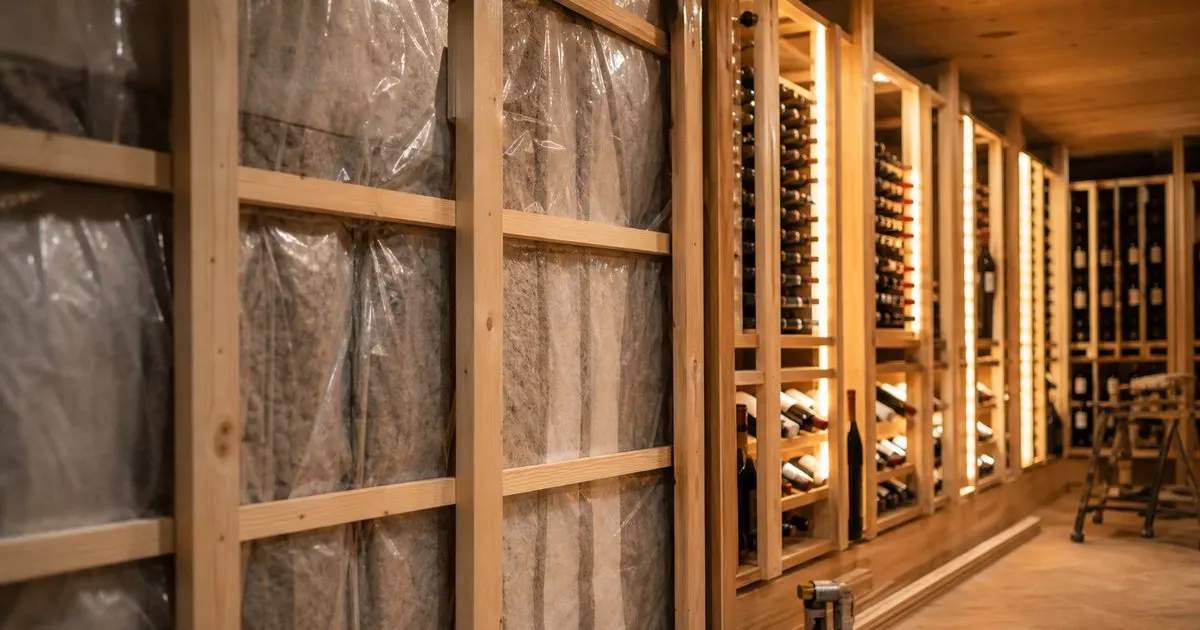
The envelope that makes it work
Insulation and a vapor barrier form the sealed envelope that a cellar depends on. Together they keep the cool, humid interior separate from the warmer, drier house, allowing the cooling system to maintain conditions efficiently instead of fighting a constant leak. Related: What is the ideal temperature and humidity for storing wine long term?
Think of them as the foundation on which everything else rests. Beautiful racking and a capable cooling unit cannot compensate for a poor envelope, because without it the conditions simply will not hold, no matter how much you spend elsewhere.
Keep reading: What conditions must a private wine cellar hold to protect fine bottles?, How do you choose between passive and active cooling for a wine cellar?, What is the ideal temperature and humidity for storing wine long term?. See how Cellarvo helps you a refined guide to building and cooling a private wine cellar.
Why the vapor barrier is critical
A continuous vapor barrier prevents moisture from migrating through the walls, where it would otherwise condense as warm, humid air meets cooler surfaces. Uncontrolled condensation can damage the structure and undermine the humidity the cellar is trying to hold. Related: Which room or space in a home suits a wine cellar best?
The barrier must be continuous to be effective, since gaps let moisture through and create problems at the weak points. This is why careful, complete installation matters so much, and why it is one of the most important, if unseen, parts of the build.
Insulation and stability
Generous insulation reduces how hard the cooling system must work and how much the interior temperature is influenced by the surroundings. A well-insulated cellar holds a steadier temperature with less energy, which protects the wine and lowers running cost. Related: What conditions must a private wine cellar hold to protect fine bottles?
Insulation also buffers the cellar against short-term events, like a warm day or a brief cooling outage, giving the conditions inertia. That stability is exactly what wine needs, making insulation a direct contributor to good long-term storage. Related: How do you choose between passive and active cooling for a wine cellar?
Getting it right the first time
Because these layers are buried behind finishes and racking, correcting them later is disruptive and costly. That makes it essential to specify and install them properly from the start, treating them as the priority they are rather than an afterthought.
When planning a cellar, ensure the envelope is designed and executed to a high standard before attention turns to aesthetics. Getting insulation and the vapor barrier right the first time is what allows the visible cellar to perform quietly for decades.
- Insulation and a vapor barrier form the sealed envelope a cellar needs.
- A continuous vapor barrier stops damaging moisture migration and condensation.
- Good insulation holds steadier conditions with less energy.
- Get these hidden layers right first, since fixing them later is disruptive.

Julien Jimenez
Julien Jimenez is an independent software builder based in Paris. He designs, ships, and operates focused SaaS products for small businesses and independent professionals. Read the full author page.
Frequently asked questions
What happens if a wine cellar lacks a vapor barrier?
Moisture migrates through the walls and condenses where warm air meets cool surfaces, which can damage the structure and undermine humidity control. A continuous vapor barrier prevents this, making it one of the most important parts of the build.
Can better cooling make up for poor insulation?
No. Without a good envelope, the cooling system fights a constant leak and struggles to hold conditions. Insulation and the vapor barrier are the foundation, so they should be prioritized over upgrading the cooling alone.
A Cellar Worthy Of The Bottles
A refined guide to building and cooling a private wine cellar. Cellarvo is built to help you put this into practice.
Plan your cellarMore from the Cellarvo blog
Get the complete wine cellars guide
Our full buying guide, the price guide, and new research as we publish it. One email, no spam, unsubscribe any time.