How do you safely move a large wine collection into a newly finished cellar?
The move is the moment a collection is most exposed, and the moment every bottle passes through your hands. Handled well, it protects the wine and sets up the room for the next twenty years.
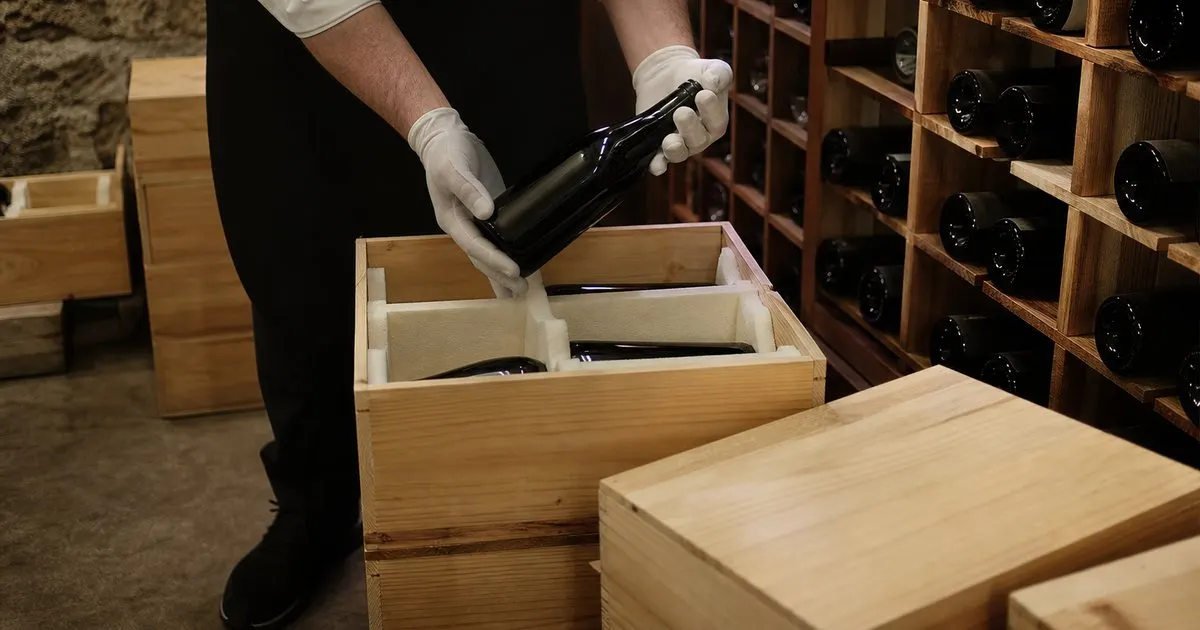
Let the Empty Room Prove Itself First
A cellar that has just been finished is not yet a cellar. Fresh joint compound, paint, adhesives and sealants release solvents for days or weeks, and wine takes on odors through cork slowly but permanently. Run the room empty with the cooling system operating for two to three weeks, ventilate it well early in that window, and give low odor finishes time to cure before a single case crosses the threshold. The test is simple. If you can still smell the finish work when you open the door, the room is not ready for wine. Related: How do you choose between passive and active cooling for a wine cellar?
Use the same period as a proving run. Place two or three logging sensors at different heights, one near the floor, one at mid rack, one near the ceiling, and read the pattern rather than a single number. A well built cellar settles into a narrow band with gentle cycling. What you are hunting for is the opposite: several degrees of stratification top to bottom, humidity drifting steadily in one direction, or a temperature that recovers slowly after the door has been held open. Correct those faults while the room is empty and easy to work in. Related: What is the ideal temperature and humidity for storing wine long term?
Keep reading: What conditions must a private wine cellar hold to protect fine bottles?, How do you choose between passive and active cooling for a wine cellar?, What is the ideal temperature and humidity for storing wine long term?. See how Cellarvo helps you a refined guide to building and cooling a private wine cellar.
Transport Without Cooking the Wine
Heat is the real enemy of a move, and it accumulates in the places people forget. A car trunk on a warm afternoon, a van idling in traffic, a garage staging area and a loading dock can each push bottles well past cellar temperature within an hour or two, and the damage does not reverse when the wine cools again. Move early in the day, keep cases in the passenger cabin with the air conditioning running for local trips, and use insulated shippers or an actively cooled vehicle for anything longer. For a collection of real value, professional temperature controlled transport usually costs less than the bottles it protects. Related: What conditions must a private wine cellar hold to protect fine bottles?
Packing matters less than temperature, but it still matters. Rigid molded inserts or purpose made wine cartons stop bottles knocking against one another, and full cases ride far better than loose bottles floating in void fill. Bottles can travel upright for a short move, which is gentler on sediment. For longer transit, laying them down keeps corks in contact with the wine. Older bottles with fragile corks and heavy sediment deserve both the gentlest handling and, where the trip allows, an upright position so the deposit stays at the base.
Rest Before You Judge Anything
Wine that has been shaken and warmed does not show well immediately. Collectors call it bottle shock, and although the term is used loosely, the effect is real enough that opening a prized bottle on the evening it arrives simply wastes it. Allow a rest period after any move: a few days for a bottle that travelled across town, several weeks for one that crossed the country, and longer still for old wine with heavy sediment that needs time to fall back to the base of the bottle undisturbed.
Let temperature normalize at the room's own pace rather than forcing it. Bottles that arrive warm should come down gradually, never in a freezer or an ice bath, because rapid contraction can draw liquid past the cork and spoil a seal that had survived decades. Resist the urge to load, unload and rearrange during the settling weeks. If you must inspect, check fill levels and capsules once, note anything that shifted in transit, and then leave the collection alone until the room and the wine have both stopped moving.
Load the Racks in an Order You Will Not Regret
The move is the one occasion when every bottle passes through your hands, so record as you place. Capture producer, vintage, format, quantity and a rack coordinate for each bottle, whether that lives in dedicated collection software, a spreadsheet or a bound notebook. Doing it during the load costs a second per bottle. Doing it afterward means pulling the entire collection back out again, which is precisely the handling you have just spent weeks trying to avoid.
Then place bottles by behavior rather than by appearance. Wine you expect to drink within a year or two belongs at eye level near the door, where retrieval is quick and the door stays open only briefly. Long horizon bottles go to the coolest and most stable part of the room, typically low and away from the cooling unit's discharge. Large formats and full cases sit on the floor or in bottom bins where their weight is properly supported. Leave a real share of every rack empty, because a collection that fits perfectly on day one will not fit in three years. Related: How much does building a bespoke private wine cellar typically cost overall?
- Run the finished cellar empty for two to three weeks so finishes cure and the room proves it holds steady.
- Transport temperature matters more than packing; move early, keep bottles cooled, and never stage them in a hot trunk or garage.
- Give wine a rest period after the move, from a few days locally to several weeks after long transit.
- Record producer, vintage, format and rack position as you load, and leave genuine headroom for growth.

Julien Jimenez
Julien Jimenez is an independent software builder based in Paris. He designs, ships, and operates focused SaaS products for small businesses and independent professionals. Read the full author page.
A Cellar Worthy Of The Bottles
A refined guide to building and cooling a private wine cellar. Cellarvo is built to help you put this into practice.
Plan your cellarMore from the Cellarvo blog

Get the complete wine cellars guide
Our full buying guide, the price guide, and new research as we publish it. One email, no spam, unsubscribe any time.