How do you size a cooling unit for a private wine cellar correctly?
Sizing by cubic footage alone is the most common mistake in cellar design. Here is how thermal load, glass, insulation, and location change what your cellar actually needs.

Why cubic footage is only the starting point
Manufacturers publish a cubic-footage rating for each unit, and that number is what most homeowners compare first. It is a reasonable shorthand, but it assumes a well-insulated room, a sealed vapor barrier, an exterior-grade door, and a surrounding space that stays at ordinary indoor temperature. Change any of those assumptions and the rating stops describing your cellar. A 400-cubic-foot room in a finished basement and a 400-cubic-foot room beside a garage in Phoenix present completely different loads, even though the volume is identical. Related: Which room or space in a home suits a wine cellar best?
The more honest way to think about the problem is heat load: the amount of heat that leaks into the cellar each hour and must be removed to hold the target temperature. Heat load comes from the walls, ceiling and floor, the door, any glass, lighting, people opening the door, and the bottles themselves when new wine arrives at room temperature. A capable installer or the unit maker's engineering team can run a load calculation; most reputable brands offer one at no cost and ask for the same handful of inputs. Related: What conditions must a private wine cellar hold to protect fine bottles?
Keep reading: What conditions must a private wine cellar hold to protect fine bottles?, How do you choose between passive and active cooling for a wine cellar?, What is the ideal temperature and humidity for storing wine long term?. See how Cellarvo helps you a refined guide to building and cooling a private wine cellar.
The inputs that actually move the number
The temperature difference between the cellar and the space around it is the single largest factor. A cellar held at 55 degrees Fahrenheit inside a 70-degree basement asks far less of a unit than the same cellar against a sun-facing exterior wall that climbs past 90 degrees in summer. Note the warmest condition the surrounding space will reach, not the average, because the unit must keep up on the worst day of the year, not the typical one. Related: How do you choose between passive and active cooling for a wine cellar?
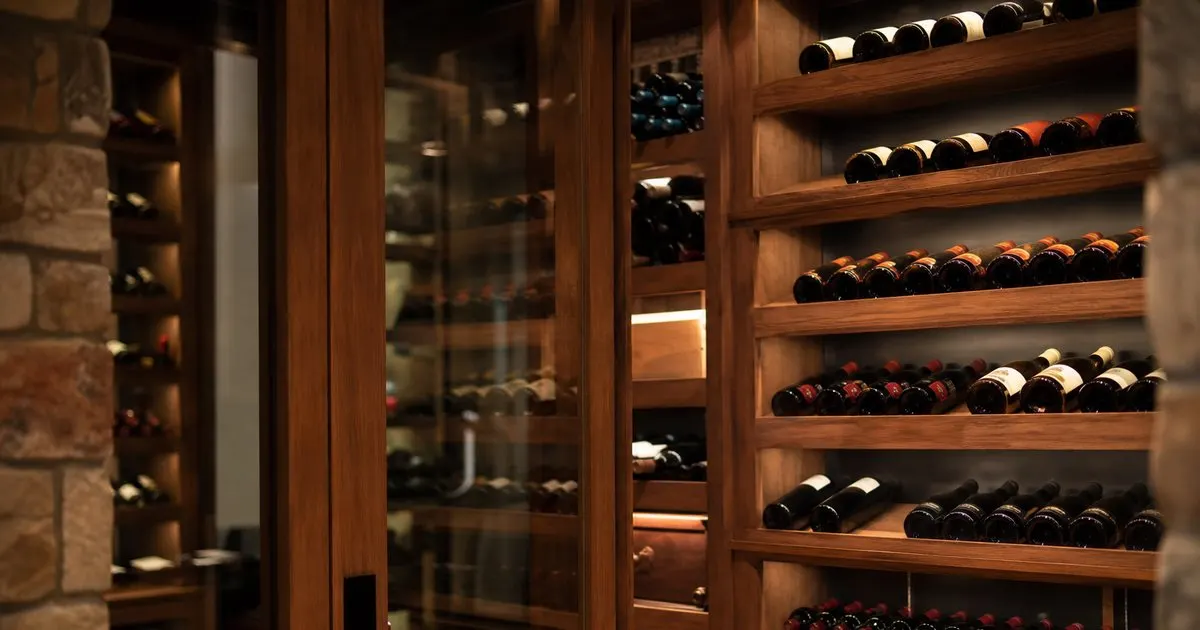
Insulation R-value in the walls and ceiling, the presence of a vapor barrier, glass area, and the type of door follow closely. Every square foot of glass leaks heat many times faster than an insulated wall, so a glass-front cellar can require a unit rated for several times its cubic footage. Recessed lighting adds heat while it is on, and a cellar that is opened frequently for entertaining sees a real load from air exchange. Give the installer honest answers about how you will use the room.
Why oversizing is not the safe choice
It is tempting to buy the largest unit that fits, on the theory that extra capacity is harmless. It is not. A grossly oversized unit reaches setpoint quickly, shuts off, and cycles on again shortly afterward. Short cycles put wear on the compressor, produce wider temperature swings than a unit running longer at steady output, and strip humidity from the air without giving it time to recover. Wine wants slow, steady conditions, and a properly matched unit delivers them by running for long, even stretches. Related: What is the ideal temperature and humidity for storing wine long term?
The goal is a unit whose capacity comfortably exceeds the calculated load on the hottest expected day, with a modest margin for aging equipment and future changes such as added lighting or a bigger collection. Installers typically describe this as sizing to the peak load plus a cushion rather than doubling the number. If the calculation lands between two models, the discussion should be about the specifics of your room, not simply taking the larger one by default.
Questions to ask before you sign off
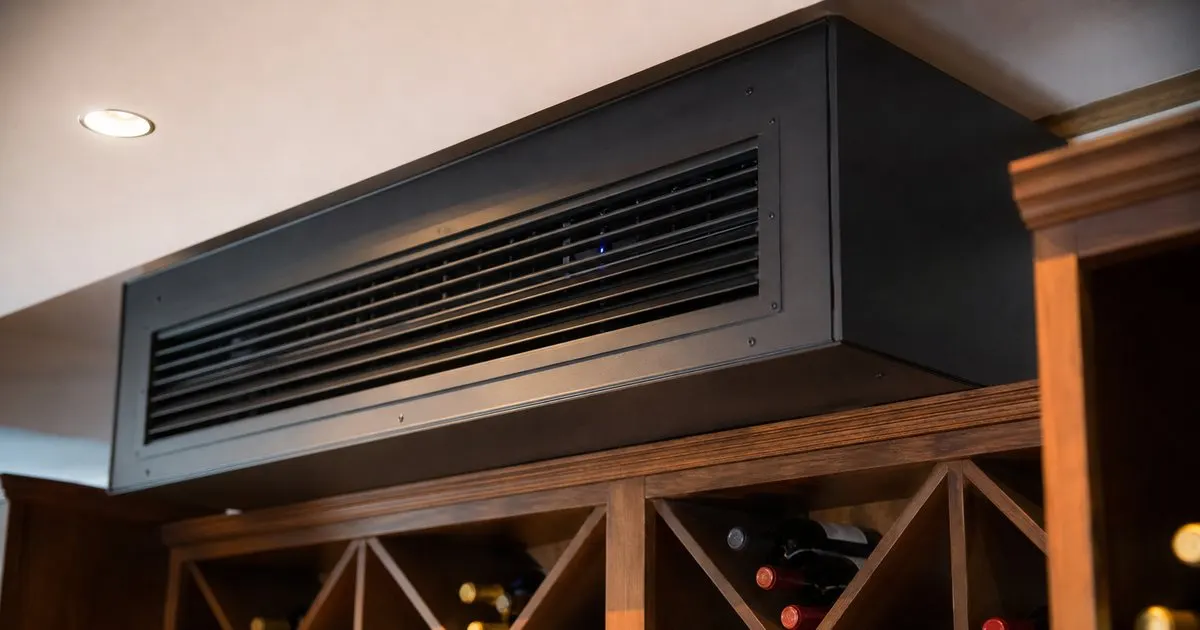
Ask the installer to show the load calculation, including the assumed exterior temperature and insulation values. If those assumptions do not match your house, the number is wrong no matter how professional the paperwork looks. Ask where the condenser side will exhaust its heat, because a unit that dumps warm air into a small closet or a sealed mechanical room will lose capacity as that space warms up. Ask what happens to performance if the surrounding space gets warmer than the design assumption.
Finally, ask about the cellar's own construction before the cooling conversation ends. Many sizing problems are really insulation problems in disguise, and it is almost always cheaper to add insulation and seal the room properly than to buy a larger machine to fight a leaky envelope for the next fifteen years. As an independent guide we may earn a commission on some products we link to, but the best advice we can offer is to fix the room first and size the unit second.
- Cubic-footage ratings assume a well-insulated, sealed room; real sizing depends on heat load.
- The peak temperature of the surrounding space, not the average, sets the requirement.
- Glass, lighting, and frequent door openings can multiply the required capacity.
- Oversizing causes short cycling, humidity loss, and wider temperature swings, so match capacity to calculated load with a modest margin.

Julien Jimenez
Julien Jimenez is an independent software builder based in Paris. He designs, ships, and operates focused SaaS products for small businesses and independent professionals. Read the full author page.
A Cellar Worthy Of The Bottles
A refined guide to building and cooling a private wine cellar. Cellarvo is built to help you put this into practice.
Plan your cellarMore from the Cellarvo blog

Get the complete wine cellars guide
Our full buying guide, the price guide, and new research as we publish it. One email, no spam, unsubscribe any time.